Çanakkale Onsekiz Mart Üniversitesi
Eğitim Fakültesi
Türkçe ve Sosyal Bilimler Eğitimi Bölümü
COMU Geography Education Students Conduct Field Study in the Western Biga Peninsula
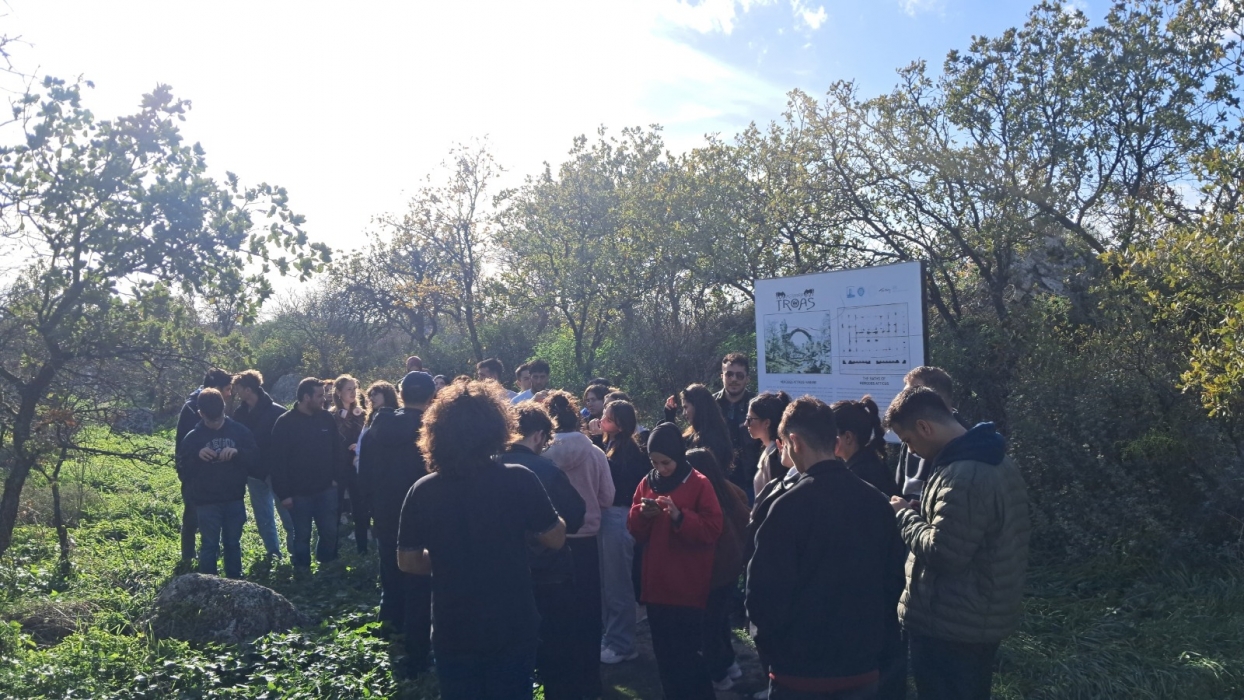
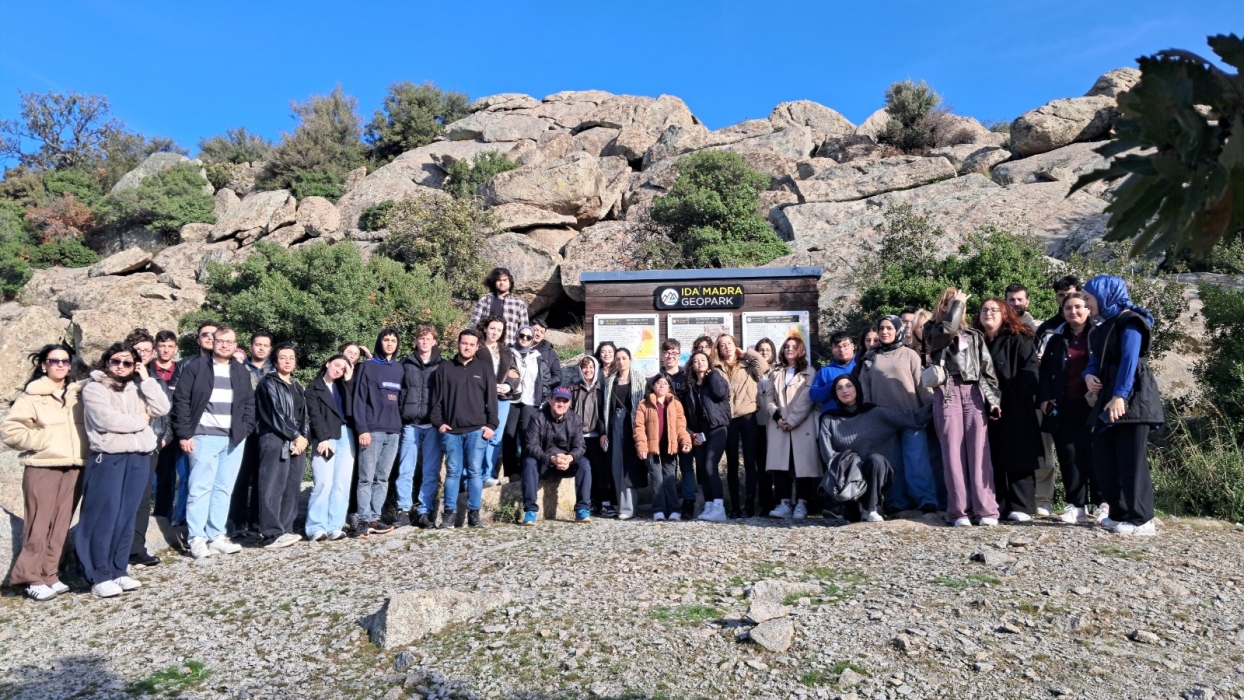
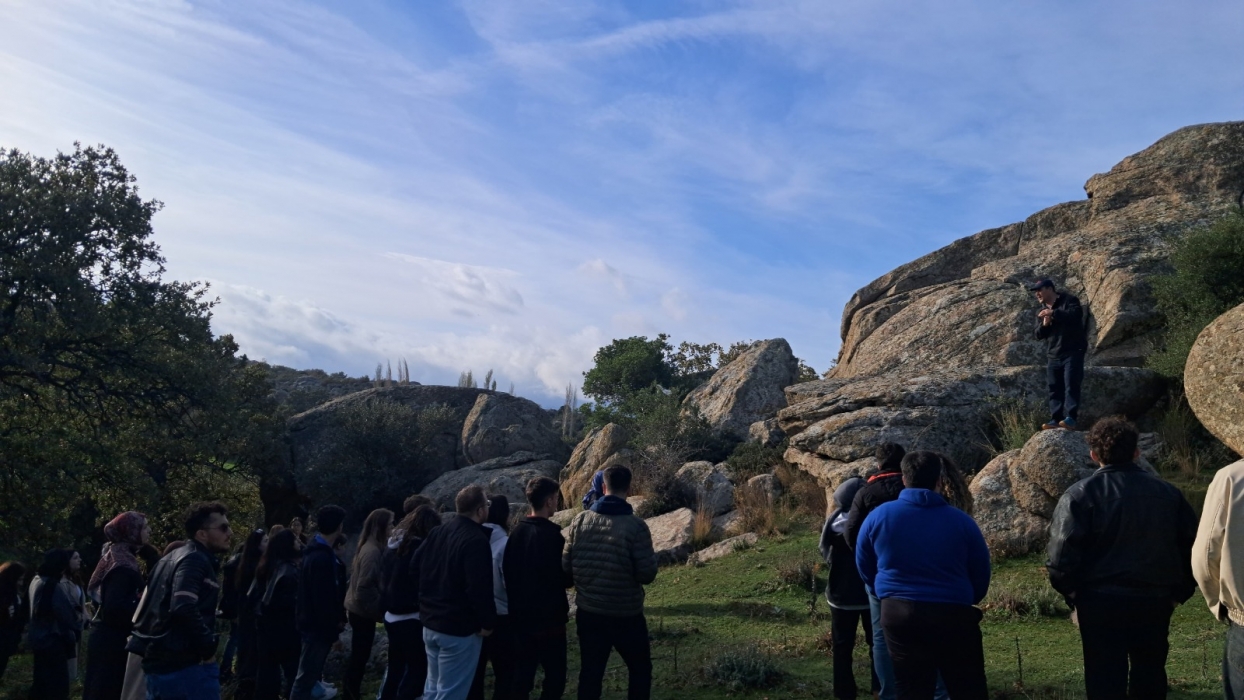
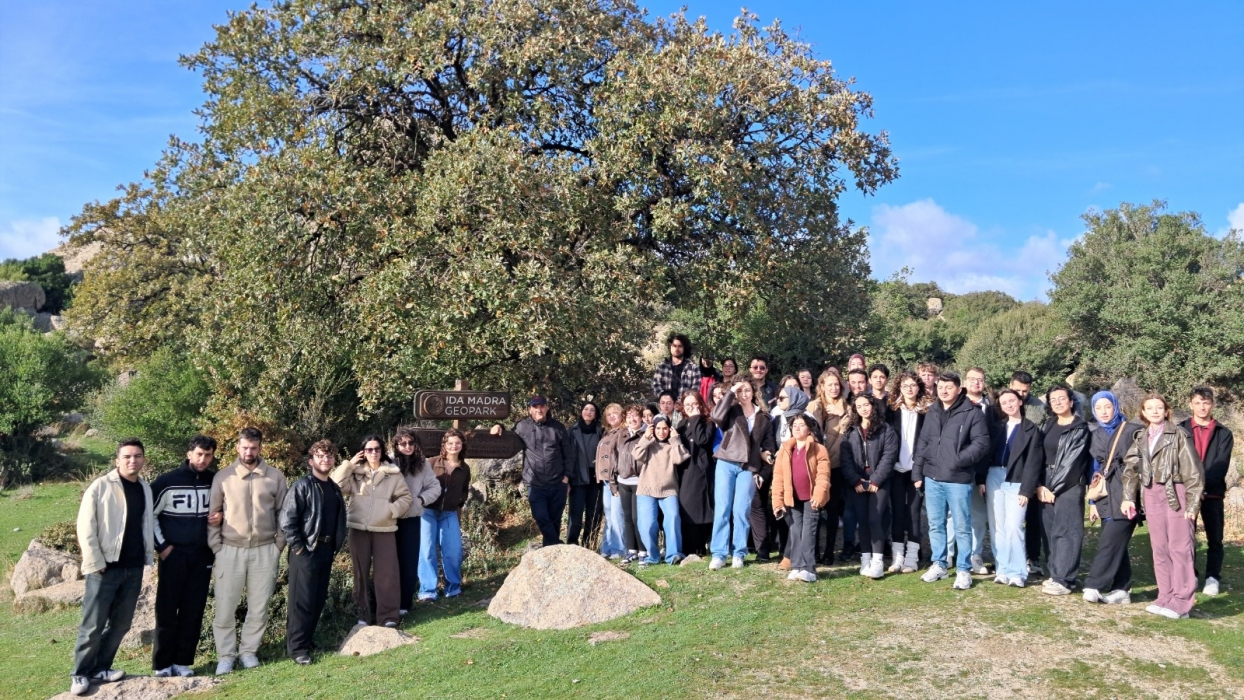
On 26 November 2025, students from the Department of Geography Education at Çanakkale Onsekiz Mart University (COMU) Faculty of Education, led by Prof. Dr. Ahmet Evren Erginal, carried out an extensive field study in the western part of the Biga Peninsula. The activity was part of the course “Spatial Analysis of the Nearby Environment” and involved 45 undergraduate (1st, 2nd, and 3rd-year) and graduate students.
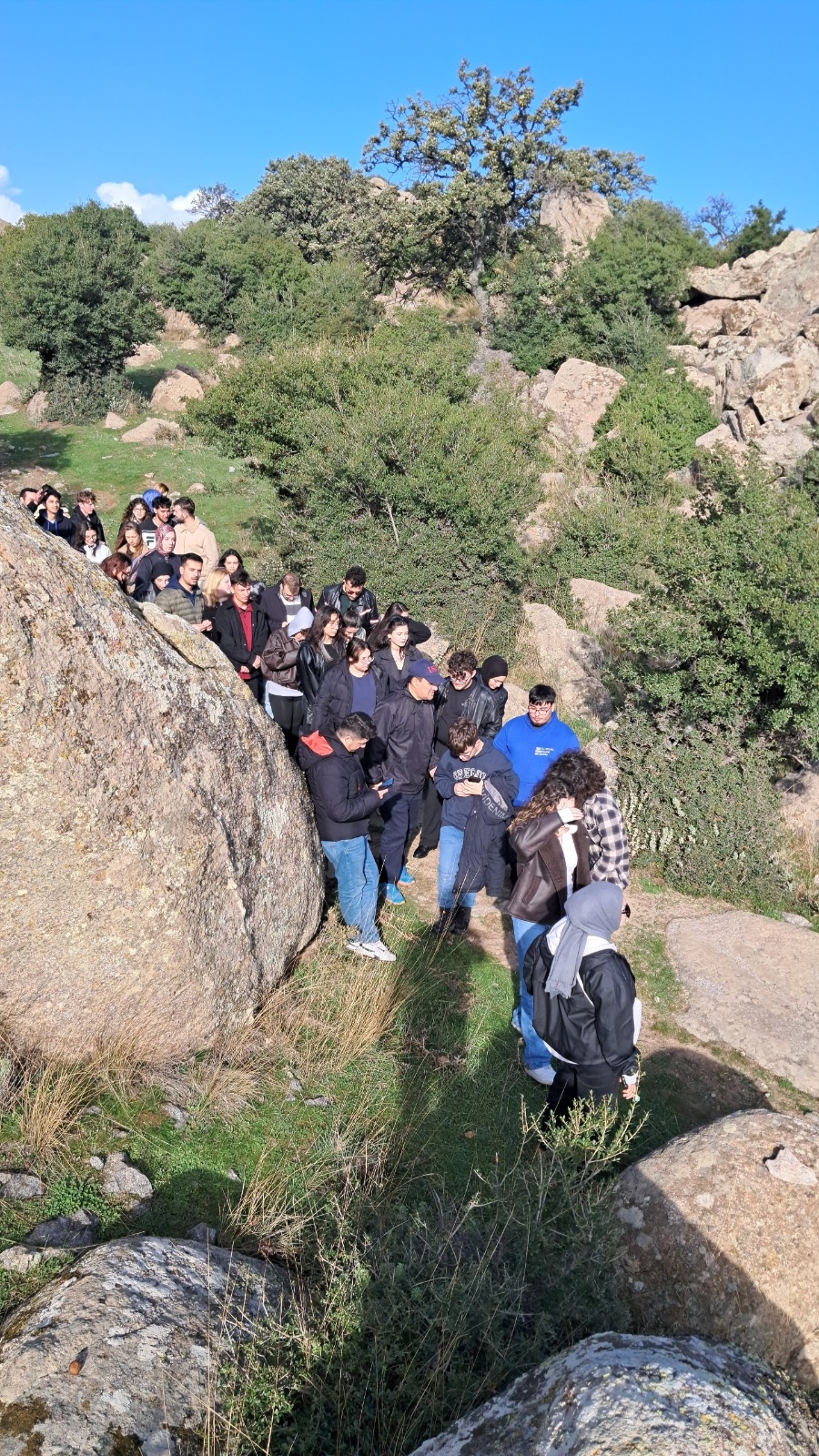
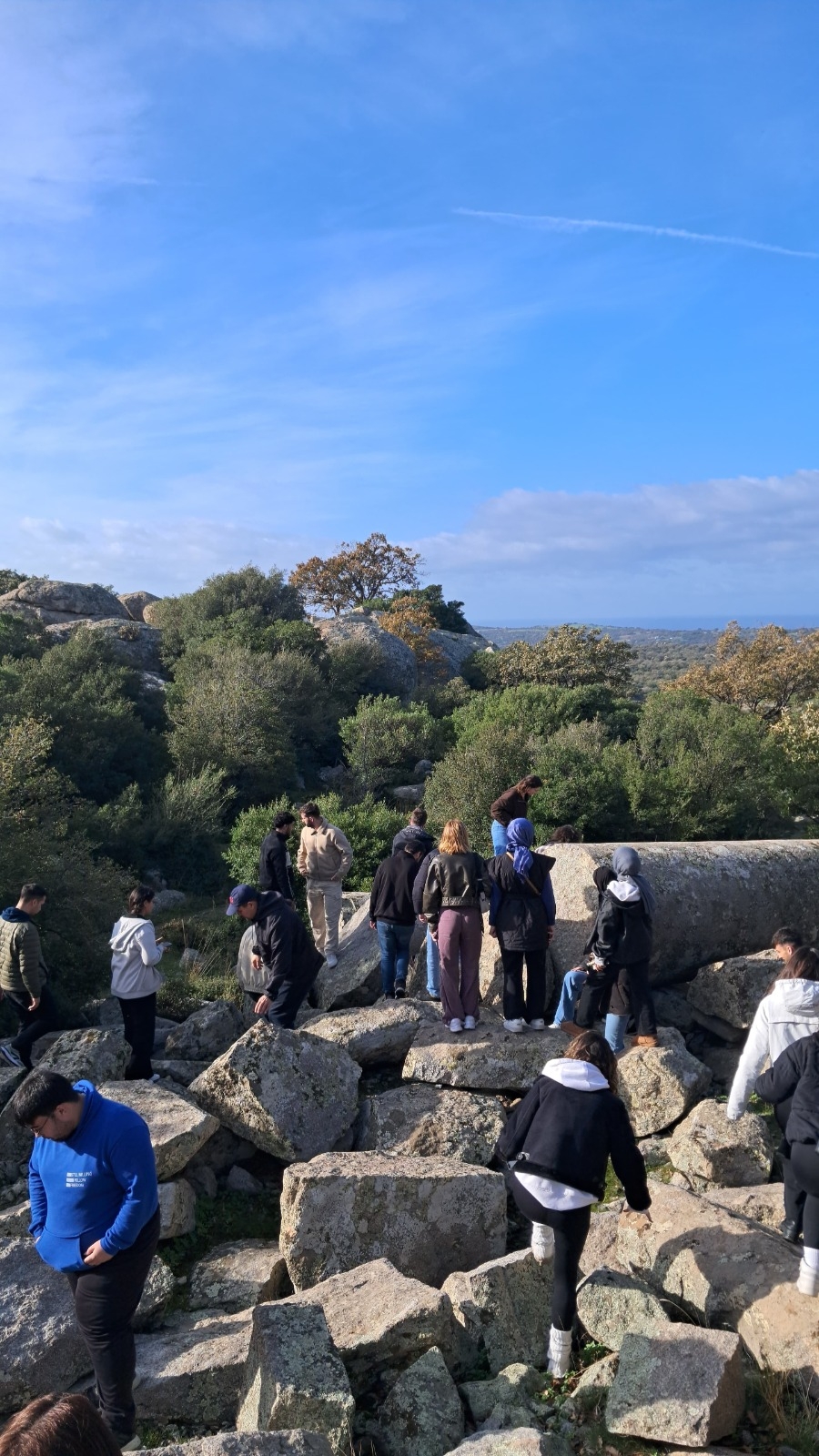
The first stop of the field trip was the Kestanbol Ancient Granite Quarry, a key geological heritage site. Students examined the formation and emplacement mechanisms of the Kestanbol granitoid, which intruded Pre-Cambrian to Triassic basement rocks during the Oligocene–Miocene period. They observed coarse-grained textures resulting from slow cooling of deep-seated magma, joint systems and their role in granite block development, tor formation and other granite landforms, the development of regolith layers and weathering processes, and lichen colonization on granite surfaces and its contribution to biological weathering. Historical aspects were also discussed, including the extraction and trade of granite during the Roman period, known as “Marmor Troadensium”. The partially processed columns at Yeditaşlar provided important examples of ancient craftsmanship.
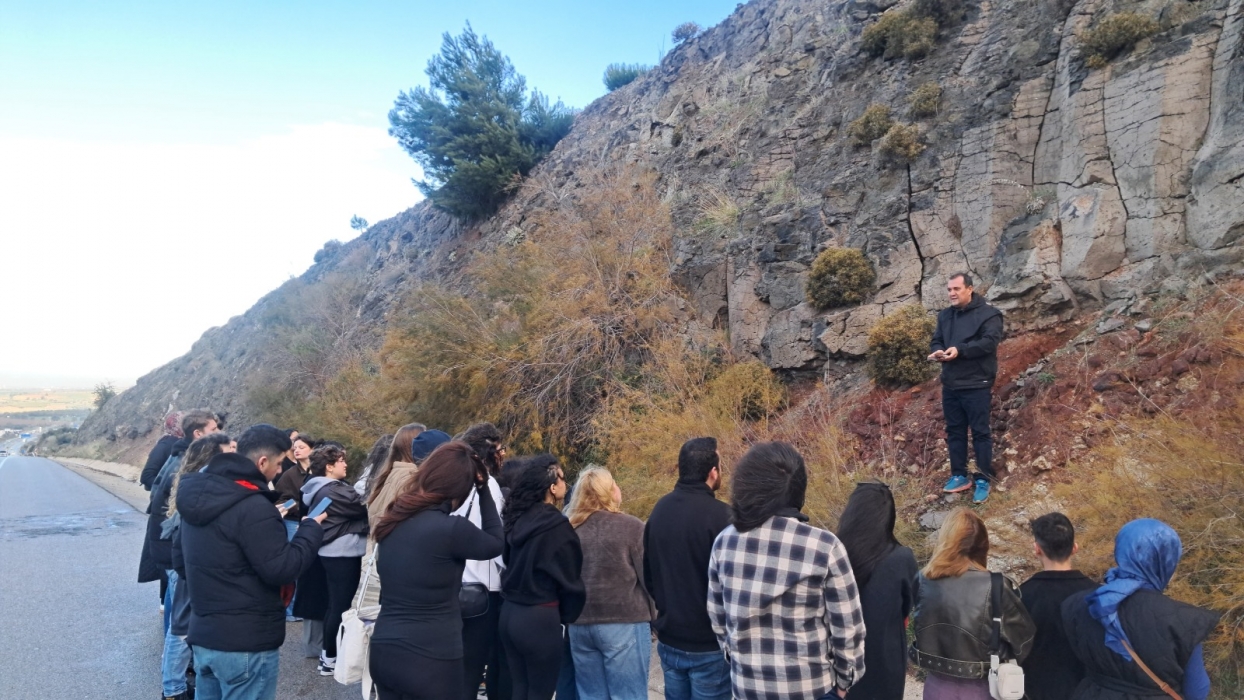
Along the Ezine highway, students studied Pliocene basalts in contact with Late Cretaceous serpentinites. Observations focused on contact relationships between mafic and ultramafic rocks, thermal metamorphism and mineralogical transformations, and tectonic influences on rock units in the contact zone.
The group also examined the Dümrek Creek cuesta, focusing on the structural arrangement of tilted strata, differential erosion between resistant and weak layers, and characteristic cuesta morphology, including slope and ridge development.
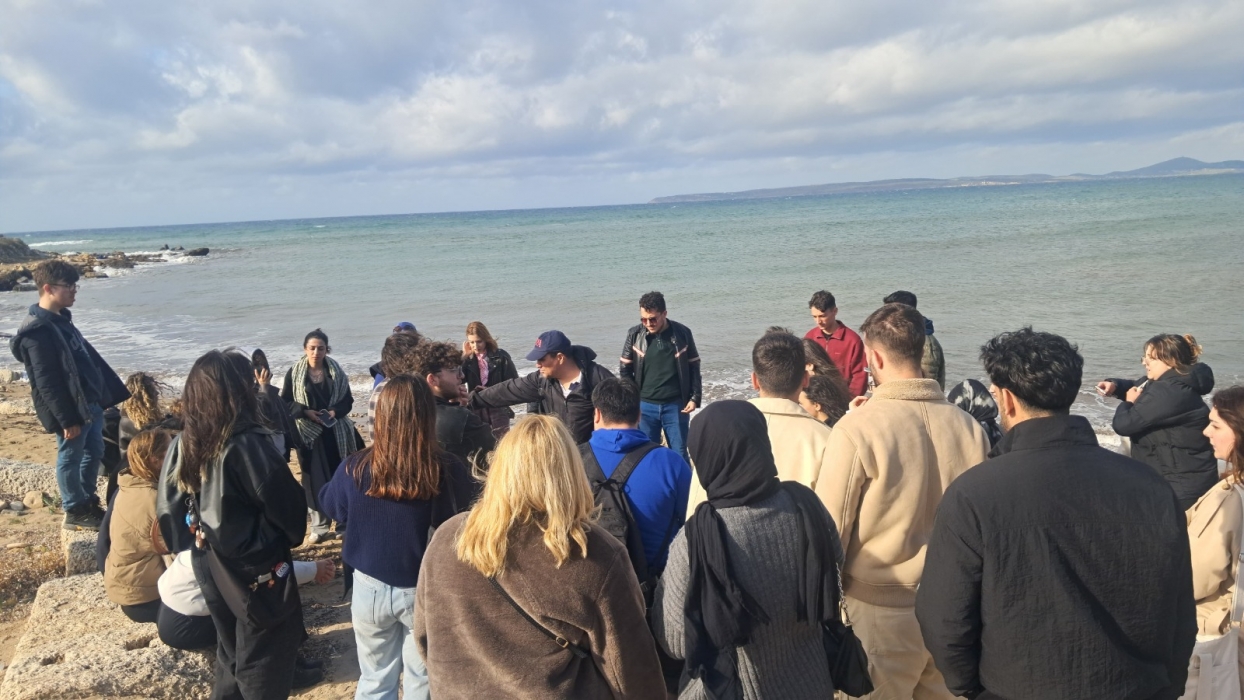
The field study continued at Alexandria Troas, where students observed sunken Roman-era granite columns in the ancient harbor area, learning about ancient production, trade networks, and port structures.
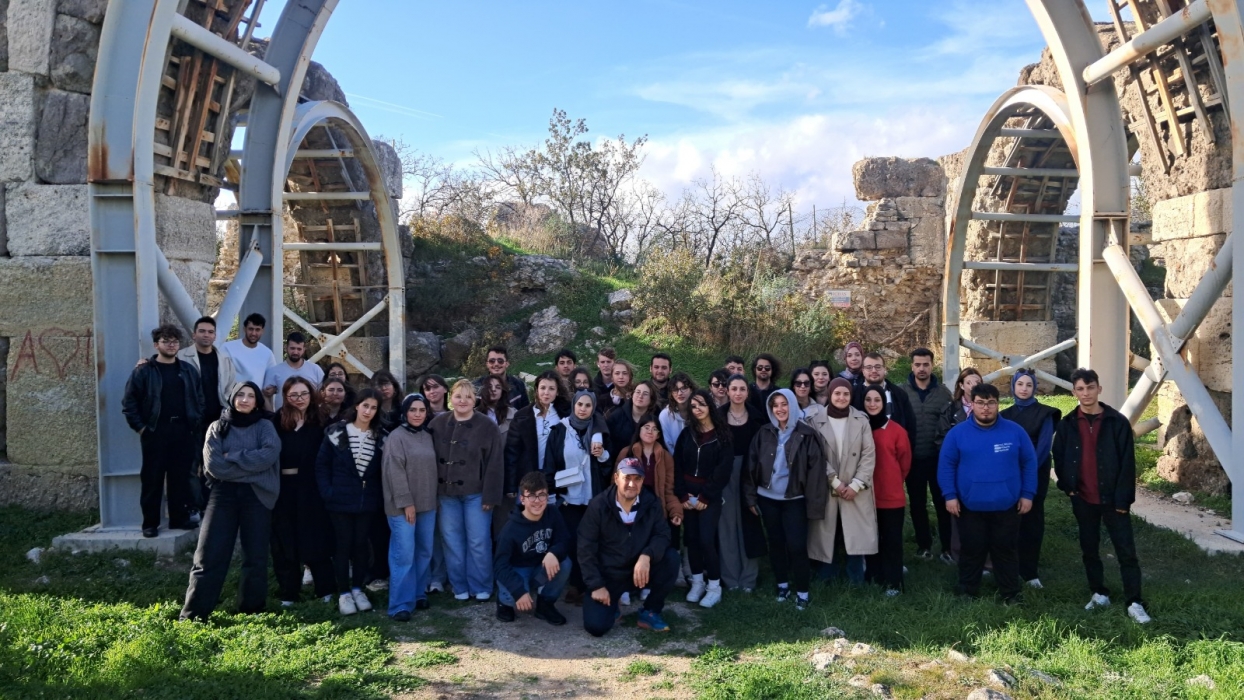
Participants also visited the Herodes Atticus Roman Bath, located in the center of Alexandria Troas. Built approximately 2,000 years ago during the Roman period, the bath’s tall arches had become worn over time and are now supported with steel constructions. Students learned about the bath’s architectural structure, preservation efforts, and its role within the urban life and economy of Alexandria Troas as a Roman colony.
The final stop was the “Kalpli Göl” (Heart Lake), a lagoon separated from the sea by a sandbar. This site was formerly the inner harbor of Alexandria Troas, active for approximately 400–500 years during the Roman period. Students conducted ecological and geomorphological observations, including sandbar formation and dune topography, dune vegetation and plant communities, color changes in the water due to algal activity, foam formation along the shoreline from algal processes, and observations of aquatic microfauna.